
Case study — Snow melter & well piping
No water from the snow-melting tank:
clogged well pipes
cleared without cutting the pipes
A case study from a business in Kita-ku, Sapporo. In a well used for about 35 years, the snow-melting tank and standpipe faucets had slowed to a trickle. Before digging up and replacing the pipes, we restored the water flow by cleaning.
Water flow up
about1.7times
Time to fill one bucket: 120 sec → 70 sec (measured by the customer)
※ With a standard 10 L bucket, that is about 5 L/min → about 8.6 L/min.
01
The problem — no water from the snow-melting tank's spray heads
The customer contacted us because the spray from their well-water snow-melting tank (snow melter) had almost stopped. Of the two pipe lines branching from the well pump, only one line had weak flow. The motorized valve was clicking into action, but only a trickle came from the snow-melting tank's spray heads. The standpipe faucet on the same line was just as weak.
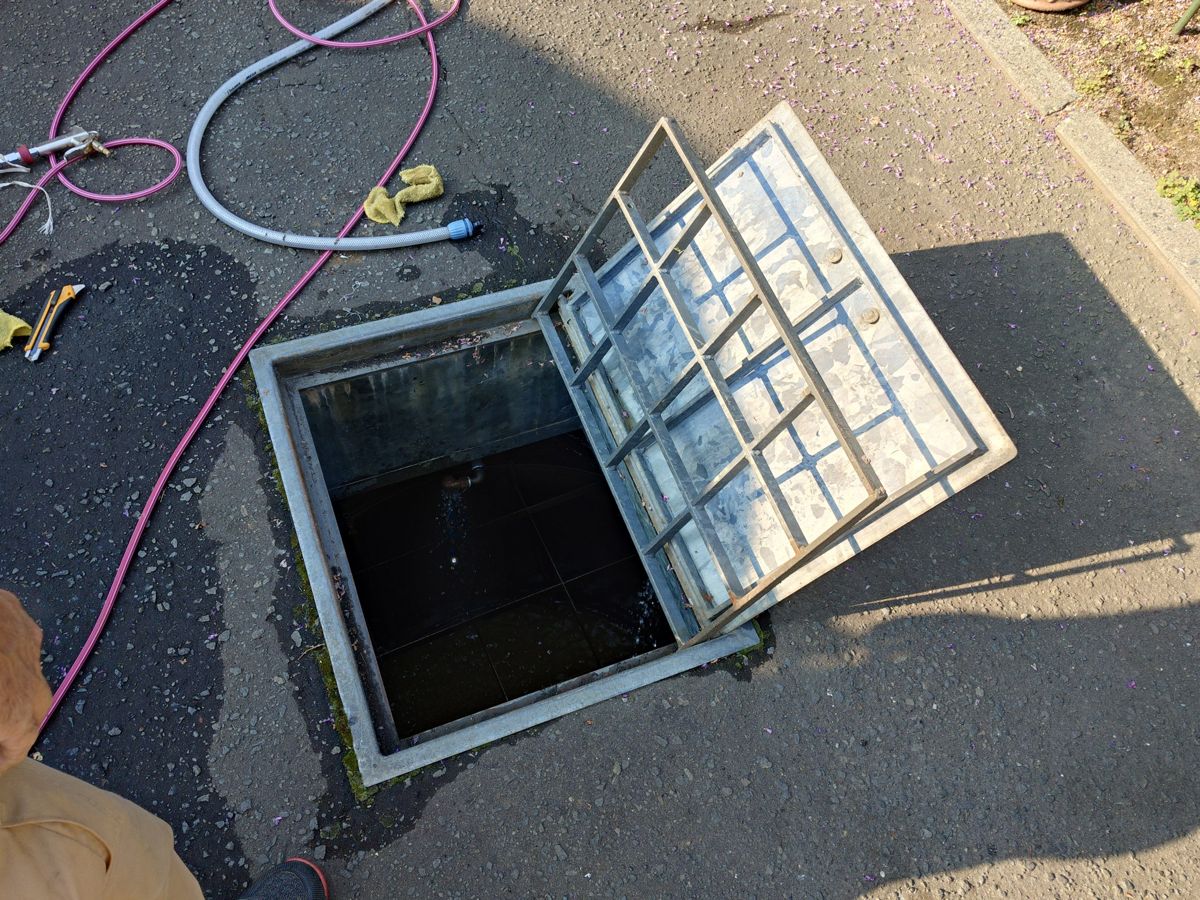
The other line had its pipes replaced just a few years ago and had no problems.In other words, the cause was not the pump but inside the pipes— that was our assessment.
Clogged well pipes are a job that is hard to get either plumbers or well drillers to take on. Replacing pipes means digging up floors or the ground, which adds cost and time. This time, we started with what could be done before that.
02
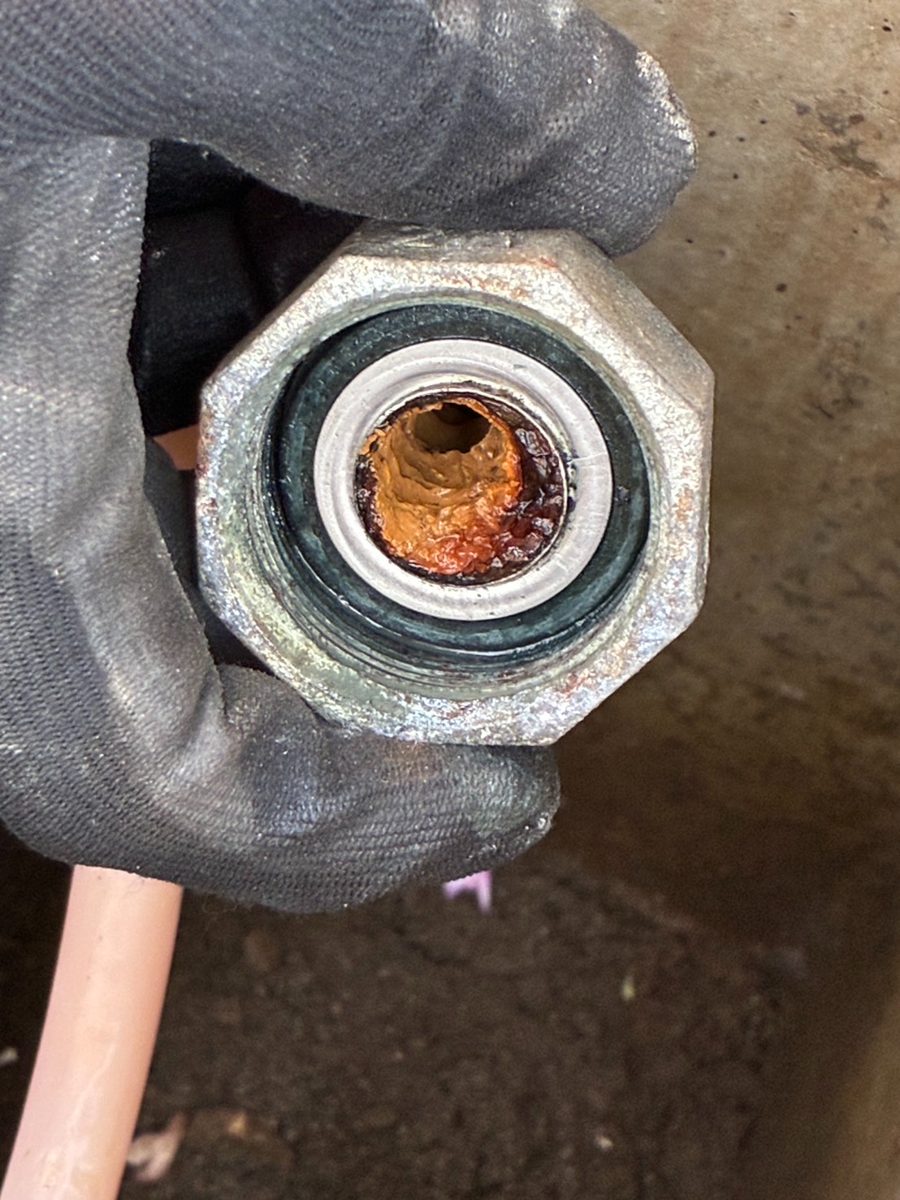
Cause — iron from the well water (iron scale) had clogged the inside of the pipes
Much of Hokkaido's well water is high in iron (known locally as "kanake"). Over many years, this iron and the slime produced by iron-loving bacteria gradually build up inside the pipes.
03
The work — cleaning well pipes from the inside, without cutting them
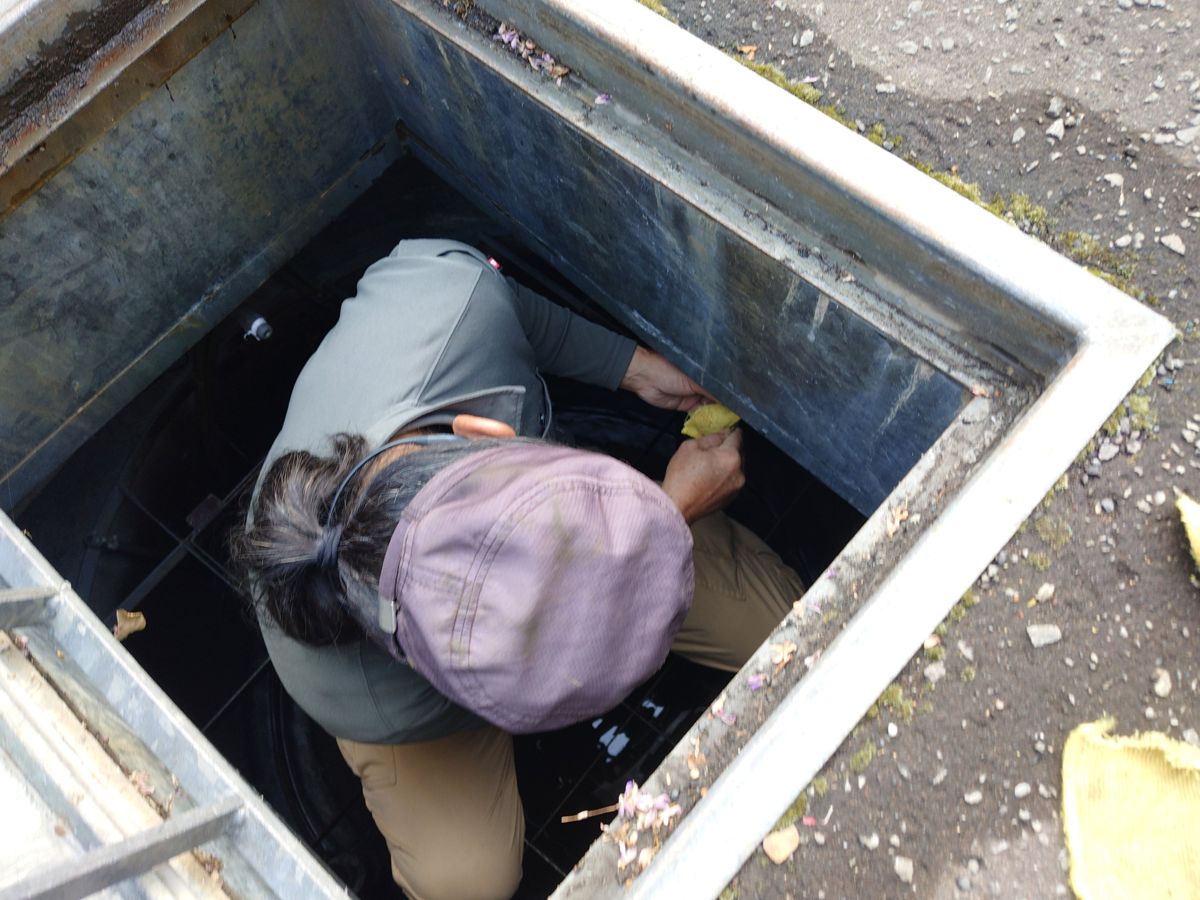
This time, instead of digging up the pipes, we circulated cleaning solution between faucets to dissolve the deposits inside. The procedure has four steps.
-
Remove a joint and check inside
We check the degree of clogging and the type of deposits on the actual parts. The agent and time used depend on whether it is a hard layer of iron or a film of slime.
-
Stop the well pump and circulate cleaning solution
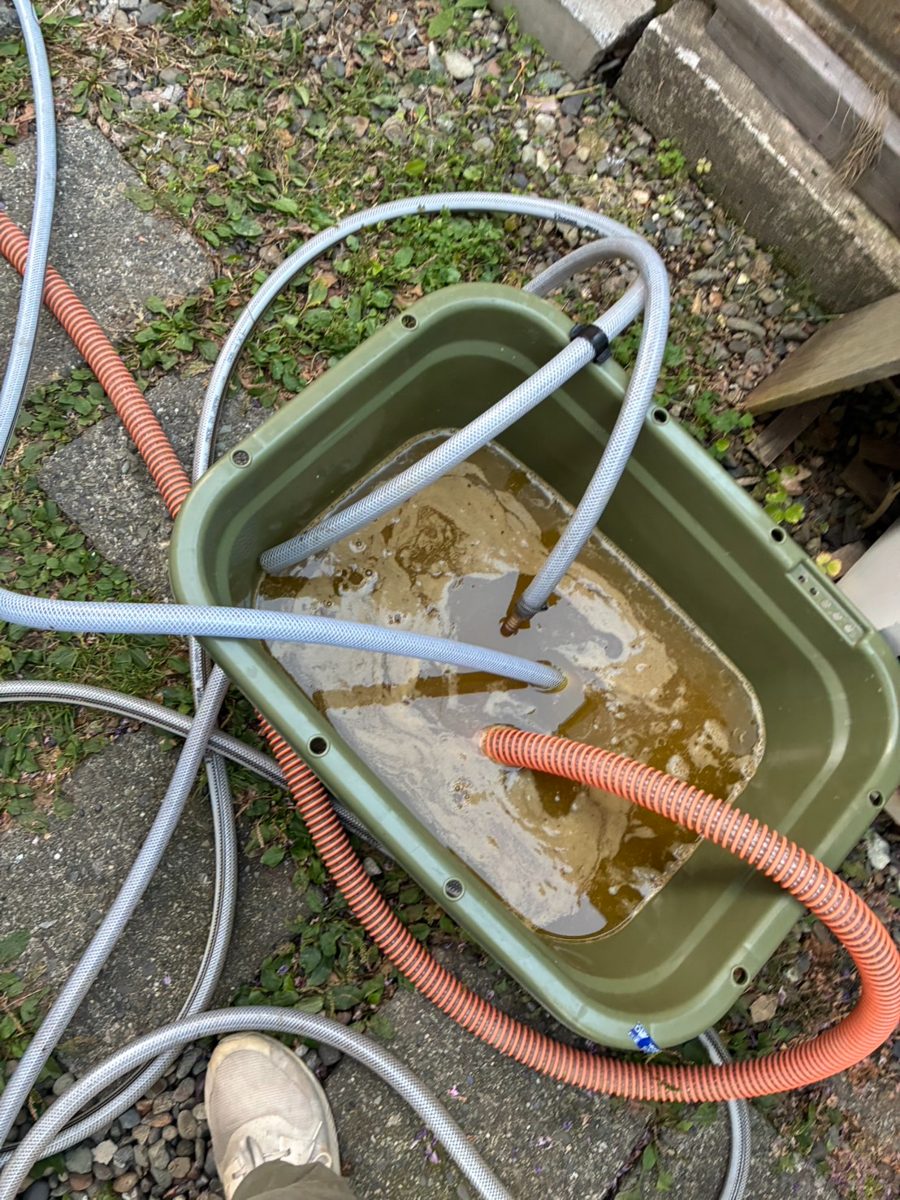
With the well pump stopped, a cleaning pump sends solution in through one standpipe faucet, through the pipes and the outlet side of the pump, and back out of the other standpipe faucet into a tub. We repeat this to dissolve the deposits little by little.
-
Clean the snow-melting tank's spray heads one by one
The four spray nozzles on each side of the tank are removed and soaked and cleaned individually. The narrowest holes are the most prone to clogging.
-
Finish with high-pressure air and water
Blow in air, run water, then blow in air again. Repeating this pushed out the remaining deposits and evened out the flow from all four outlets. Finally, everything is thoroughly rinsed with well water.
04
Cleaning agents — mainly ingredients also used in food
The main cleaning agent isan ingredient also used as a food additive. We select it and adjust the concentration to suit the type of deposits and the pipe material.
For your peace of mind
- No cleaning solution goes into the well.
- After cleaning, we rinse thoroughly with well water and confirm there is no remaining odor or sourness before handing it back.
- Used cleaning solution is neutralized before disposal.
05
Result — "It's like when it was new"
After cleaning, the customer measured the time to fill one bucket themselves.What took 120 seconds now took 70 seconds.Water flow increased about 1.7 times.
About the results
Results vary with the age of the pump and the condition of the well. At this site, both pump and well had been in use for about 35 years. We inspect before working and tell you in advance how much improvement to expect.
06
Contact us if
the water from your snow-melting tank has weakened
This includes uneven spray or only one side being weak.
there are reddish-brown stains on hoses or faucets
Iron from the well water may also be building up inside the pipes.
the pump runs but there is little water
Before replacing the pump, it is worth suspecting the pipes.
you want to avoid replacing pipes
Before digging up floors or the ground, we check how much cleaning can restore.
other companies have turned you down
Well piping is work for which it is hard to find someone to take it on. Please contact us first.
Wells in long-term use
Wells used for 20 or 30 years can change noticeably with a single cleaning.
07
FAQ — clogged snow-melting tanks and well pipes
Q. Why does no water, or only weak spray, come from my snow-melting tank's spray heads?
In snow-melting tanks that use well water, iron in the well water (iron scale) and slime produced by iron-loving bacteria often build up inside the pipes and spray nozzles and narrow the waterway. If the well pump is running but there is little water, we suspect clogged pipes.
Q. Can it only be fixed by replacing the pipes?
We first check how much cleaning can restore. At this site we cleaned without digging up the pipes, and water flow increased about 1.7 times (one bucket: 120 sec → 70 sec, measured by the customer). If cleaning does not restore it, or if the pipes themselves are damaged, we propose replacement.
Q. Are the cleaning agents safe?
They are mainly ingredients also used as food additives. No cleaning solution goes into the well, and after cleaning we rinse thoroughly with well water and confirm there is no remaining odor or sourness before handing it back.
Q. Can I ask you about a well or snow-melting tank installed by another company?
Yes, please contact us. The well at this site was not one we drilled, either. We inspect before working and tell you in advance how much improvement to expect.
Q. How much does it cost?
It depends on pipe length, the degree of clogging, and the structure of the snow-melting tank and pump, so we give an estimate after checking the site.
Q. What area do you cover?
Mainly greater Sapporo, and we travel to all of Hokkaido. With our self-built mobile workshop trailer, we can handle sites without water or power.
Q. Is there a way to prevent clogging?
With iron-rich well water, clogging progresses slowly over time. We recommend checking the spray and water volume once in autumn, before the snow falls. If the flow starts to drop, early cleaning makes it easier to restore.
08
Because we drill wells, we understand well plumbing
Nojima Well Workshop works from the drilling of the well onward. What the water underground is like, and what happens inside the pump and pipes — because we know this, we can propose repairs that don't assume replacement.
We come to greater Sapporo and all of Hokkaido in our self-built mobile workshop trailer.
First, tell us how your water is flowing.